·7 min read
“It’s not the leader, it’s how you promote” — a short reflection on leadership
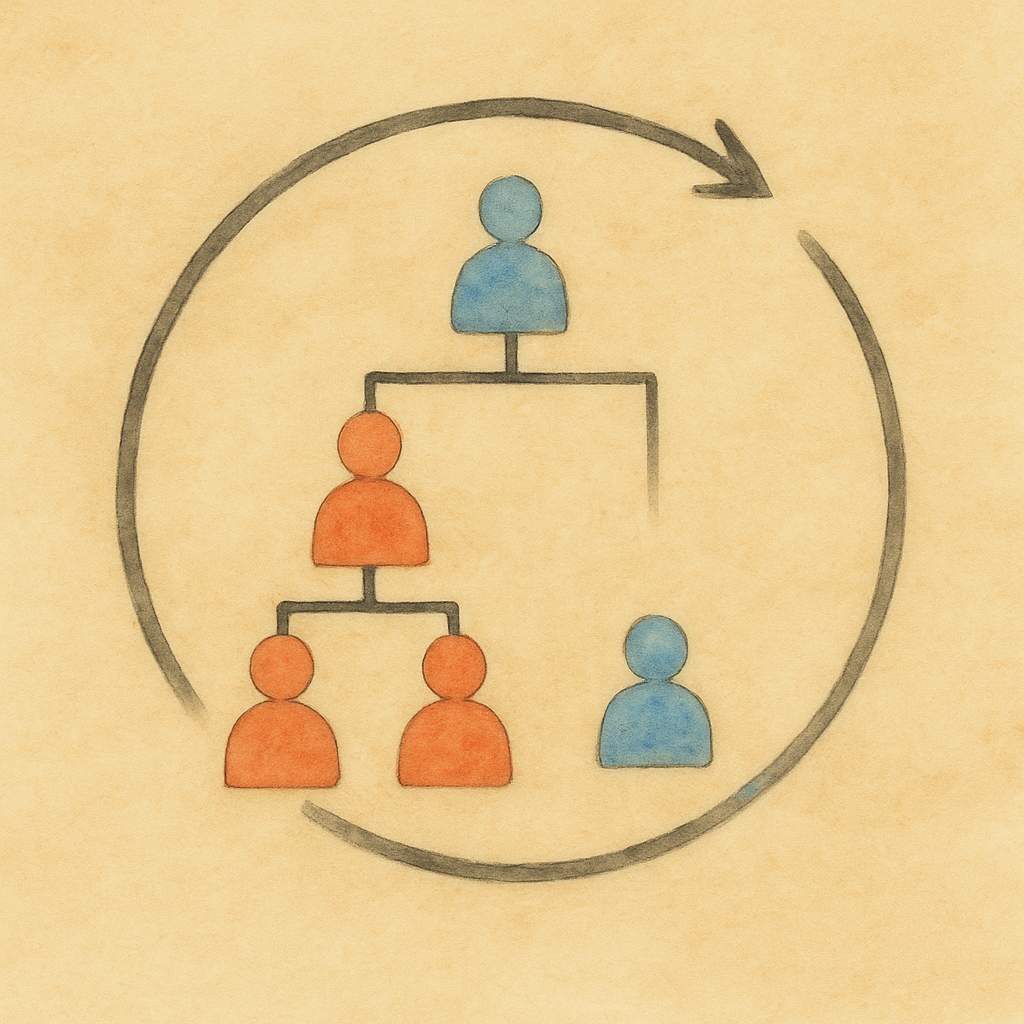
“It’s not the leader, it’s how you promote” — a short reflection on leadership
1. What’s been bugging me
I’ve been a developer, software engineer, or whatever you want to call me for a long time. I’ve been leading teams since long before I formally started my career. My first leadership experiences happened in informal settings: at my martial arts school, running training sessions; organizing trips and games with friends; and coordinating school projects. Nobody ever made me a leader through a contract back then (obviously). I just acted out of initiative and spontaneity — I had no intention of earning more or being more.
Once I got into the working world, something curious happened: I always ended up with a good level of autonomy in my jobs. Managers, leads and colleagues (even from other teams or areas) saw me as a project lead or leader and tried to steer me in that direction. Some even offered me the CTO role. Sometimes this got me into trouble, because even though it wasn’t something I was causing, people would skip over the formal leaders to talk to me. At one company, clients started calling me directly to clear up questions, ask for estimates, etc., instead of going to the company’s actual project manager (some people reading this might start remembering those situations).
And so, without looking for it, I started leading projects and people one way or another, across different companies and teams (even without a formal title). Peers at the same level in several jobs saw me as a leader. The funny thing is that this is a position I really don’t like, but apparently it comes naturally to me. That said, I do really enjoy helping build teams and fostering collaborative cultures. I’m very into psychology and organization.
Having lived in both worlds — as a developer and as a team lead — I started reflecting on something that has always bothered me but is rarely questioned inside companies: how many people are frustrated with their leaders. That widespread annoyance so many people feel — and that I’ve felt too — toward the people who are supposed to guide, inspire or make the work easier.
Like I said, I never set out to be a leader. But my surroundings seemed to push me there. And even though I accepted the role several times, I started asking myself: how do we choose the people who lead? Why should someone who excels in their role automatically get promoted into management? What skills are we actually rewarding? Could this be why so many people complain about their leaders?
I’ve seen up close how many people end up in leadership roles for reasons like:
- Seniority.
- Good performance in their previous role.
- Academic degrees.
- Personal connections inside the company.
The problem isn’t just individual. This led me to think the problem is structural. The traditional hierarchical model rewards people with promotions — and better salaries — once they no longer stand out in their new role. That ends up producing poorly led teams and wasted talent.
Think about that great professional who, in order to keep growing financially, has to stop doing what they love to manage people. Does it make sense to force someone to change course when they’re already excellent at what they do?
2. Are we rewarding incompetence?
That was my next question (the title). It’s always struck me as odd that leadership roles automatically come with a higher salary. The argument is that they carry more responsibility. But is that the only valid kind of responsibility? Isn’t solving complex technical problems, creating beautiful and innovative designs, etc., just as demanding — or even more so?
The way I see it, we’re confusing types of responsibility with levels of importance. And that has consequences.
For me, right now, the leader role is just another profile — needed in many cases like any other, neither superior nor inferior.
3. The Peter Principle
These questions led me to discover the Peter Principle, proposed by Laurence J. Peter in 1969:
“In a hierarchy, every employee tends to rise to their level of incompetence.”
In other words, someone who is really good at their current job will get promoted… until they reach a role where they’re no longer competent, and that’s where they’ll stay. The result is that many people in leadership positions don’t know how to do their job well, and they end up creating more problems than solutions — often hurting their people along the way, not because they’re bad people, but because the system pushed them into a position they weren’t prepared for.
4. It’s not arrogance, it’s observation
For years I wondered whether thinking this way was a form of arrogance. Was it a lack of humility? Or did I just not understand how hard it is to lead?
But over time — studying leadership, reading, comparing experiences and watching what happens around me, including my own experiences leading — I confirmed it wasn’t just a personal feeling. It was real. In more than 10 years in the industry, I’ve seen this pattern repeat over and over. And while there are exceptions, I’ve only worked at one company where this problem was practically nonexistent.
I think this phenomenon has a much bigger human cost than we realize. A bad leader can affect not only a team’s performance, but also each person’s motivation, growth and well-being. And the most frustrating part: lots of great professionals abandon what they love because they feel that climbing the hierarchy is the only way to move forward.
Talent gets lost, excellence in a craft gets punished, and a model that rarely works keeps perpetuating itself.
5. What if we did it differently?
I haven’t been thinking about this just out of curiosity or boredom. I intend to build something of my own — a business, a company. And I’ve asked myself: if I pull it off, what kind of place do I want to create?
And I’ve reached these conclusions:
- I want professional growth to not mean moving away from what you love or are good at.
- I don’t want to see any more great engineers, designers or creators give up their calling just to meet an empty hierarchical expectation.
- I reject the idea that leading people is the only path to recognition or a better salary.
- An exceptional engineer can — and should — earn more than a manager if their impact justifies it. Leadership is a form of service, not a ladder to power.
- I don’t want to work in structures where power belongs to whoever understands the work the least. Where the loudest opinion comes from whoever is furthest from the problem.
- I want to build teams where excellence in every role is respected as a legitimate growth path. Where everyone can choose their own direction without having to sacrifice their talent to “move up”.
- And above all, I don’t want to repeat the pattern I’m criticizing.
6. Other cultures
There are different ways of organizing and rewarding talent that don’t reproduce this structural problem. You don’t need to be an elite company to build a healthier, more effective culture; in fact, many of the companies we see today got where they are precisely because of the culture they chose to build from the start, not once they were already big. For example:
- At Spotify, the importance of the “individual contributor” is recognized, and you can grow professionally and salary-wise without taking on management roles. You can be a Staff or Principal Engineer without leading people.
- GitLab promotes dual career paths: a technical one and a leadership one, with compensation aligned to impact, not title. Technical growth is valued as much as organizational growth.
- Valve is a radical example, with a completely flat structure where people choose which projects to work on and there are no formal bosses. In this model, leadership is earned through influence and results, not by appointment.
8. My personal take, as of today
I would definitely implement the IC (individual contributor) track alongside the manager track. I’m sure I wouldn’t hire external leaders, because it seems risky to me and not very empathetic toward the current team members. I believe a leader should be recognized by their peers, so everyone would have the chance to be a genuine leader within their teams if the team wants it. I wouldn’t only have formal leadership profiles; I’d also promote self-management and encourage individual contributors to lead projects without being “leaders by contract”.
9. I want to hear your opinion
What’s your workplace like? What have your good and bad experiences been? And even more interesting: what do you think a good structure for growing professionally — and in a healthy way — should look like?